Patmeena Sabit
In Conversation
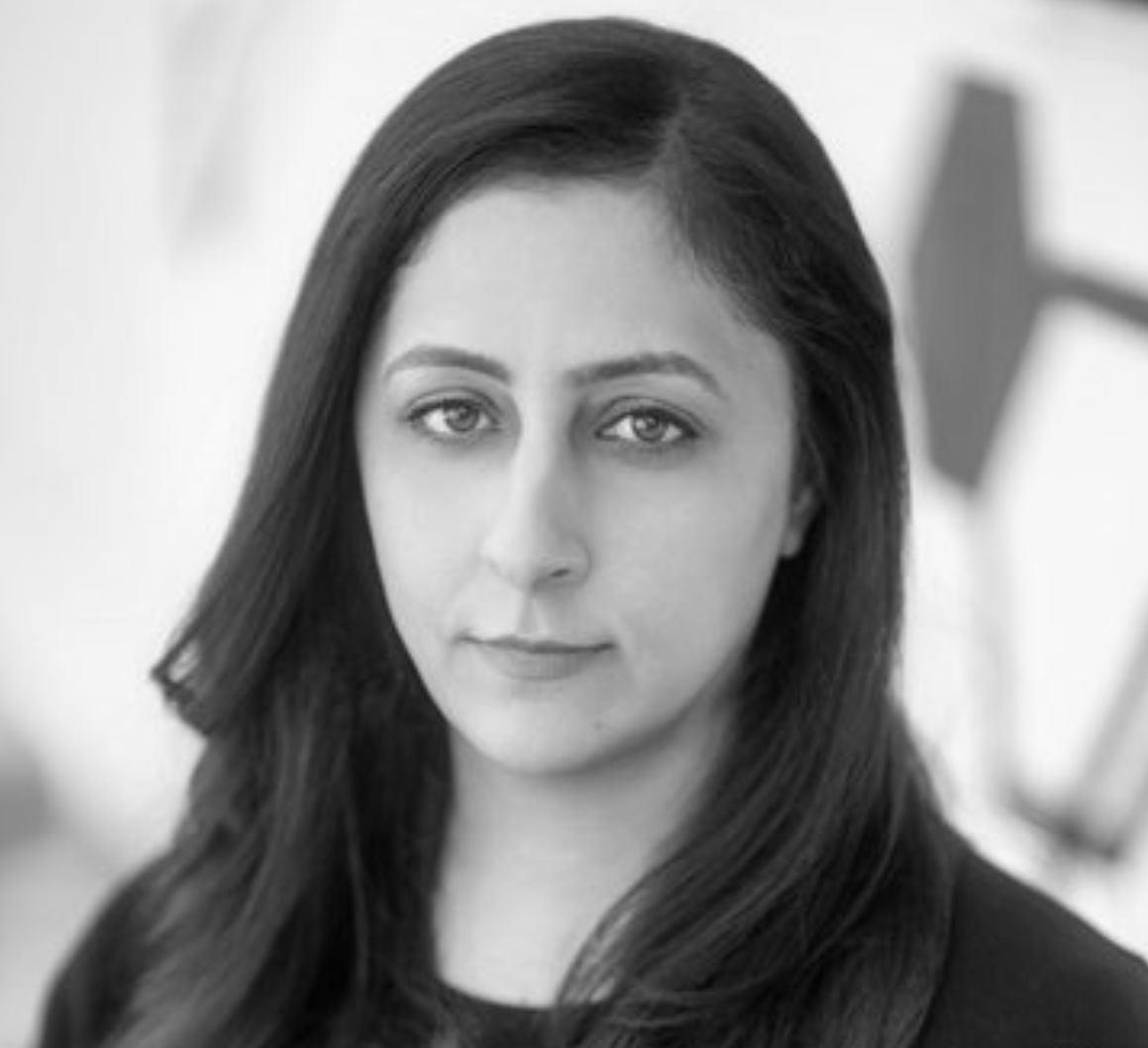
We spoke to Patmeena Sabit about her debut novel, the ten-year journey to publication, and the importance of staying true to your creative vision.
Interviewed by Nancy Adimora
NA: First question: where did this whole writing thing start? Was it a case of, “I’ve always wanted to be a writer,” or was there a particular spark of inspiration?
PS: A lot of writers talk about wanting to write since childhood, but that wasn't the case for me. I came to it, like many writers do, with a great love of reading. I read anything and everything I could get my hands on from a very young age, because I grew up in a home where books and education were revered. My mother had been a teacher at a girls’ high school in Kabul and my father had studied law, but I think his great passion was books and writing. He had a library at home and I was the only one of his children who had inherited his obsession. I was the kid with the novel in between the chemistry book, reading when I was supposed to be studying.
But I never thought that writing could be a career path or something that I would do seriously. I think in my parents’ time, when they were growing up in Afghanistan, people who wrote were people who also had serious jobs. So you were a doctor and maybe you wrote novels, or you were an engineer and you wrote poetry. So I never really considered it as something that you could pursue as a profession.
I think what changed for me was when I went to university. I studied international development and my focus was on women’s rights, so nothing to do with literature. But I took a few literature classes as electives, and I was introduced to some writers that I had never read before.
Reading Wide Sargasso Sea by Jean Rhys was a radical shift for me, just in terms of thinking about narrative authority and who gets to tell stories and whose voices are silenced, and so whose stories are therefore forgotten. That was where the shift took place for me, and I realised that it wasn’t enough for me to just read anymore. I knew that at some point I would probably attempt to write.
NA: So how did you go from thinking I should attempt to write to actually sitting down and doing it? Was it this particular book idea that prompted you to start, or had you been playing around with ideas before then?
PS: I sat down and wrote some other things, but they all ended up in the drawer because they just didn't feel right. I had been writing for a few years before this idea came to me.
I think the gigantic difference for me between this project and the others was the vision. This was the first time where I had 100% faith in the vision. I didn’t have faith in my own abilities - that’s always in question, even today - but this was the first time that I really felt like I had a vision that I could trust 100%, and that if I could just get as close to it as I could, I would have something.
NA: Well, you definitely succeeded! And for those who aren’t familiar with the book, Good People is the story of the Sharaf family, an Afghan American family whose seemingly perfect life begins to unravel after the death of their eldest daughter, Zorah. Told through the voices of the people around them, the book explores what might have happened to Zorah, but also much bigger questions around family, community, and so much more.
How did the idea actually come to you, and what made you feel so strongly that this was a story you needed to tell?
PS: In 2009, I had seen a news story about a family that had been arrested in Canada, and then they were later charged and convicted with honour crimes against their daughters and another woman within the family. I had some academic background in this area because I had written a thesis on honour crimes in Jordan during my undergraduate degree, but as an Afghan woman I also had a personal perspective as well.
Although I was incredibly privileged to be born to parents who encouraged me to go out and forge my own identity, I also grew up within a community where the idea of family name and honour were very important. From a very young age, I knew that there was a frame of acceptable behavior, and that to step outside of that frame would be detrimental or fatal to my family’s name - their good name as good people.
So when I saw this story in the news, I followed it, and I began thinking about the way these stories are told. They’re often told through police and social workers, maybe the teachers, some neighbors of the families and the victims. But what I thought was glaringly absent were the voices from the community.
And so I felt that I wanted to write a story, not about the fact of an honour crime, but about the possibility of an honour crime, and to really focus that on the voices of the community. That was really the genesis of the idea.
NA: Such an incredible idea, and I completely see why you had so much faith in the vision! Ok, so once you knew what you wanted to write, what did the writing process actually look like in practice? How did you fit the book around your other commitments?
PS: When I began writing this book, the jobs that I was doing were contract jobs so I was able to work for a few months and then have a certain block of free time before the next job began. During those periods, I really treated the writing as a nine-to-five - I would go to the library and spend the whole day writing.
This was the first time that I was writing with that kind of intensity and purpose. With the other books, I was writing a little bit - 45 minutes here, two hours there. But this book felt different. I really felt like I had to put the time in.
When I eventually stopped contracting and joined the 9-to-5 world, everything completely flipped. I had to start writing around work so I would set my alarm a little earlier so I could spend some time writing in the morning. After work, weekends, any vacation time - everything went towards writing.
NA: And how long did it take to get to a draft you felt was ready to send out?
PS: Well, I always say that I didn’t write one book - I feel like I wrote three or four books because it took on so many different forms, and the structure was so difficult to pin down. I was really in the dark from page to page and sentence to sentence. And I think that’s just the way I write. I was figuring it out as I went along.
I will say that from 2013, when I first began to write the book, it took 10 years for me to finally say “I have done everything I can possibly do to this manuscript. And now I can’t take it any further by myself, and it’s now time to put it out into the world.”
NA: Wow, 10 years! I love that. It reminds me of—I don’t know if you’re familiar with Min Jin Lee and her work?
PS: Yes, I love her work! She’s one of my favorite authors. I’ve ordered her new book - I can’t wait to get into it.
NA: Oh, it’s stunning. And the book is thickkk - over 600 pages, but we’re not complaining…
PS: She could write 1,000 pages and we would read it. It would be a privilege to read it.
NA: An absolute privilege! Anyway, I mention Min Jin Lee because her writing process usually takes 10 years, and when you read her novels, it's clear to see where she spent the time. I honestly feel the same about your book, so I'm definitely not surprised it took so long. But moving on to publishing, did you have any connections with the industry? How did you get your foot in the door?
PS: No, I had absolutely no publishing connections and I hadn’t studied the industry at all. So I really just cold emailed agents the way you do. I would look up the agents, see what they required, and send an email with a query letter.
And as I said to someone the other day, I’m a proud slush pile author. I entered publishing through the slush pile.
NA: Love that! And how long did it take before you started getting feedback?
PS: I started in April, and then I signed with my agent, Sharon Pelletier, in October of that year. I was lucky in that I did get agents who requested to see the full manuscript, but I also got a lot of nos. And they were lovely nos, and lovely rejections, but rejections nonetheless. But when Sharon reached out and asked for a phone call, that was the beginning of our work together.
NA: So, you’ve got an agent and the book is ready to go out into the world. What was the submission process like, and how did you eventually find your publishers?
PS: I did a few rounds of edits with Sharon, and when we took the book out, I remember thinking it could take over a year before we heard back from publishers. But we ended up hearing back relatively quickly.
I said I didn’t really know anyone in publishing, but I knew who Amy Einhorn was and greatly admired so many of her books. My editor Carla Josephson in the UK was also lovely and incredibly enthusiastic about the book. I was so fortunate in that they just immediately saw and believed in my vision for the book.
Honestly, the whole publishing process has felt like a dream. I don’t know what other authors go through, and I have nothing to compare it with, but they really championed this book, and they asked for my input at every step, so it’s really been a dream process for me.
NA: I'm so, so happy to hear that. And having the book in readers’ hands - what has that felt like? Has there been any feedback that’s been particularly memorable for you?
PS: It wasn’t until a few months before publication that it really hit me that the book was actually going to leave my small, trusted circle. The idea of it going out to strangers was really anxiety-inducing, and there were some sleepless nights where I wondered what readers would think. But my hope was that a few people who weren't my friends and family would read it - because what makes a book real in the world is the people who read it.
When it was eventually published, people embraced the book and read it with a lot of generosity and curiosity. One of the things that most surprised me is that I thought it was such an Afghan story, and I was writing from my own experience, and writing about this Afghan community within this larger community in Northern Virginia. I was trusting the reader to see that we are not a monolith. Afghans are not a monolith. The diaspora is not a monolith. Afghan Americans or Afghan Canadians are not a monolith.
I really trusted the reader to see that, and a lot of people have, but what’s really surprised me is how many people, especially women, reached out and said, you know, “I’m Greek American and I grew up with the same ‘what will people say?’ question.” I got the same feedback from Italian Americans and people from completely different backgrounds. They all felt like they could connect with Zorah’s story because they knew how difficult it was to struggle between two worlds.
So the response has been incredibly humbling and just touching.
NA: As a British-Nigerian, I can also relate. It was an absolute triumph - well done! Now, finally, if you could give one piece of advice to an aspiring author, what would it be?
PS: When I started writing it in 2013, I had this vision in my mind and it was so pristine and simple and beautiful, and I thought, “All I have to do is sit down and transfer this onto the page.”
What’s deceptive about these visions is that when they come to you with such clarity, you also think that you're going to be able to transfer it onto the page with the same clarity. And of course, that’s not the case. That was very naive on my part. So when I felt that tremendous gulf between my abilities as a writer and the vision I had for the story, I stopped writing after a few months and decided to work on some other projects. But I just couldn't shake this story.
As cliché as it sounds, I'm a firm believer that you don't choose a story. The story chooses you. I would fall asleep thinking about this family. I’d be walking around and, suddenly, a fragment of conversation would come to me and I’d think, “I have to rush home and put that in a Word document for later.”
So at some point I just realised that I had to sit down and write this book, for better or for worse. And even though I still didn't have the ability to be true to the vision, I kept writing. It took me 10 years to finish because I was learning through the doing.
Writing a book, poems, short stories - whatever it is - it’s such an act of faith and you have to keep the faith. No matter how long it takes you, you have to stay true to the story you want to write. You have to hold the vision and you can't let go of it.
Sit down and do the work. That would be my advice because that's what I did. Don't give up on it and don’t be discouraged.
Patmeena Sabit was born in Kabul a few years after the Soviet invasion of Afghanistan. When she was a month old, her family fled the conflict and became refugees in Pakistan, joining the millions of other Afghans that had sought refuge there. They later moved to the United States and she grew up in Virginia. She currently lives in Toronto.
Photo: © David Chang Photography